Showing posts with label Essay. Show all posts

Thursday, March 26, 2015

Essay: Native American Stories

This week we continued to read stories from the Native American unit.  I read the Indian FairyTales unit this unit which I thought was particularly interesting.  These past two weeks reading from the native American selections has been an intriguing reading experience.  I thought that the way the two units could clearly relate to one another was particularly interesting.

American Indians were very different across various tribes.  Their ways of life, travel, housing, social structure, and other means of societial measure differed in vast ways.  However, one observable phenomenon across all tribes is the respect they show for nature and life. 

In my two Native American story units I could observe a clear correlation between the storytelling and nature.  The animals, the seasons, crops, plants, and all aspects of nature were present in every single section of my units.  It was clear that the stories being told relied on the aspect of nature and life surrounding the indians as a medium to pass on knowledge and tell stories.  The emphasis on life around them is an example of the reverence they paid to the natural world and the elements.


I think that this kind of respect is something that could be shown on a greater level in our society.  We rarely tell stories that directly incorporate or emphasize the natural world around us.  The only modern story I can think of that really ties in the Earth is the Lorax by Dr. Suess.  In the Lorax Dr. Suess actually talks about how if we don’t start to care about the world around us we could end up in quite the predicament.  I think we have gotten so used to just having the world, having trees, having air that we take it for granted.  However, if we don’t start to take responsibility and care for the world we live in?  Things could drastically change for the worst.  
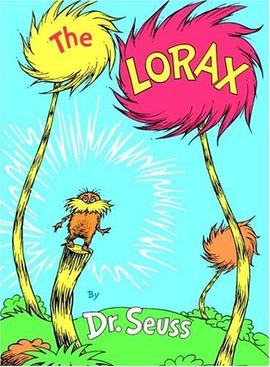
The Lorax
By: Dr. Suess
Image from Wikipedia 

Thursday, February 5, 2015

Sinbad a Hero? Week 4 Essay

This week my story unit was the Voyages of Sinbad.  Obviously, as the title would suggest, Sinbad is the main character in this story unit.  The next common and logical assumption is that Sinbad is automatically the hero of this story unit. My perception of Sinbad is somewhat on the fence.  The tales he tells are extremely far fetched and in a fantasy world they are without a doubt compelling. The obstacles he repeatedly encounters and ultimately overcomes are also highly challenging situations to get out of.  Therefore, in the neutral terminology Sinbad would be considered a hero. 

However, the tales are so far fetched that one must wonder how true they would really be considered.  In these stories he escapes death time and time again, without fail.  He never saves anyone else; he is always the lone survivor with no one to refute his stories of successful in the face of danger.  Wouldn’t a true hero make some sort of effort to save the others who faced the same perils as them?  In my opinion a true hero wouldn’t boast so proudly the tales of being a lone survivor; instead they would mourn for those who they were unable to save. 


Female Heroes
Image from WorldPress
My definition of a hero is someone who not only overcomes obstacles for themselves, but for others.  A hero should also effectively be a savior.  Someone who can aid others in their time of need and can assist in the rescue of their companions.  Of course heroes also have a sense of higher morals, higher responsibility, and over all feel compelled to answer to a higher calling.  The natural assumption in reading the Voyages of Sinbad is that because Sinbad is the protagonist that he is automatically a hero.  I don’t mean to say he’s a bad guy or label him as a villain, but by my definition and personal opinion?  Sinbad wouldn’t quite measure up to the definition of a hero. 

Friday, January 30, 2015

Essay: Ovid's Metamorphoses

This week the story unit I selected came from the Classical selections of the UnTextbook.  To follow up my previous week’s selection of Jewish Fairy Tales I decided to transition into some Greek Mythology.  Therefore, my week 3 reading unit was Ovid’s Metamorphoses. 

I thought that the description of this unit was very clear regarding what the stories would talk about as well as what mythological characters would be represented throughout the unit.  Even before accessing the unit directly through the UnTextbook the small description was also clear in its outline.

Something I liked about this unit was its style of writing.  In comparison with the previous unit I read I think that this unit is more of how I picture stories being read as well as told.  That’s not to say I didn’t appreciate last week’s story unit, simply that I prefer this style of writing when reading materials like this.  I think it’s easier to lose yourself in a story when you read it from a storyteller perspective.  It was almost like The Princess Bride, where you watch the grandfather read the story to the boy, but you’re able to seamlessly immerse yourself into the story at the same time.  This style of story telling provides a story within a story and I think the levels contribute to the reader’s ability to identify with the fantasy elements.

The Princess Bride
DVD Artwork Cover
Acquired from Rotten Tomatoes 


Something I think this story could benefit from is maybe a character map.  I’m a very visual thinker at times and the presentation of information in chart format is extremely beneficial.  I think when dealing with subjects such as Greek Mythology a lot of individuals think they have some kind of base understanding when the reality is that these characters are inner woven and very complex at times. Perhaps the presence of a who’s related to who and how kind of chart would help people to reference when reading these kind of units.  Especially to provide a more holistic picture at the end of reading all the sections.

Wednesday, January 21, 2015

Essay: Jewish Fairy Tales

This week my storybook unit was the Jewish Fairy Tales section.  The section featured 11 short stories from the Jewish culture.  The overview of the unit determined that the stories come both from biblical origin as well as more recent and present times. 

Overall, I thought this unit was very enjoyable.  I could both appreciate and somewhat disliked the mixture of stories from different parts of Jewish culture.  I think my first glance opinion of this story unit was that it would be less religiously based than it was.  However, being a part of the Biblical section of the class should have clued me into to such a factor.  Perhaps a separate unit between Jewish religious stories and Jewish fairy tales in general, such as old wives’ tales and such would provide more clarification. 

Having experience wit biblical teachings and biblical stories allowed me to seamlessly understand who was being spoken about in different stories.  For example, who Noah, Abraham, the Pharaoh, and other biblical characters being placed into stories wasn’t a problem for me.  However, for individuals without that kind of experience some background information of these characters and their significance may be beneficial to the full enjoyment of the stories.    

Several pieces of different stories surprised me.  Particularly the story about Noah and Og the Giant, The Giant of the Flood, was surprising to me.  I would not have pictured the Jewish culture telling a story involving a giant in the midst of the great flood.  Also, a unicorn being present in this story threw me for somewhat of a loop.  Simply because I didn’t expect that kind of fantasy to be worked into a biblical rooted story.

Og and the Unicorn
Photo acquired from The UnTextbook


This story unit provided me with a good look into the Jewish Fairy Tales, which is what I sought to gain by reading this section.  I can see somewhat tangencies to the other story units that I reviewed during week one in their construction and voice from which the story is told.