Showing posts with label Week 10.. Show all posts

Thursday, March 26, 2015

Essay: Native American Stories

This week we continued to read stories from the Native American unit.  I read the Indian FairyTales unit this unit which I thought was particularly interesting.  These past two weeks reading from the native American selections has been an intriguing reading experience.  I thought that the way the two units could clearly relate to one another was particularly interesting.

American Indians were very different across various tribes.  Their ways of life, travel, housing, social structure, and other means of societial measure differed in vast ways.  However, one observable phenomenon across all tribes is the respect they show for nature and life. 

In my two Native American story units I could observe a clear correlation between the storytelling and nature.  The animals, the seasons, crops, plants, and all aspects of nature were present in every single section of my units.  It was clear that the stories being told relied on the aspect of nature and life surrounding the indians as a medium to pass on knowledge and tell stories.  The emphasis on life around them is an example of the reverence they paid to the natural world and the elements.


I think that this kind of respect is something that could be shown on a greater level in our society.  We rarely tell stories that directly incorporate or emphasize the natural world around us.  The only modern story I can think of that really ties in the Earth is the Lorax by Dr. Suess.  In the Lorax Dr. Suess actually talks about how if we don’t start to care about the world around us we could end up in quite the predicament.  I think we have gotten so used to just having the world, having trees, having air that we take it for granted.  However, if we don’t start to take responsibility and care for the world we live in?  Things could drastically change for the worst.  
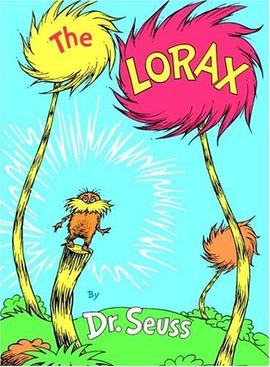
The Lorax
By: Dr. Suess
Image from Wikipedia 

Tuesday, March 24, 2015

Storytelling Post: Indian Fairy Tales Units

Once there was a boy living out free in the woods with his sister.  The brother and sister were free to roam around the wilderness as it pleased them.  Being so free and unattached the brother and sister had many splendid adventures together.  They went all around the country side and had collected a great number of tokens to commemorate their adventures. 

One of the boy’s most treasured tokens was his fur coat that his sister made for him from the pelts of the white rabbits.  The boy would wear the coat to remember how they had traveled far and long to reach the land of the white rabbits.  He recalled how the bounded through the snow and darted so quickly through the fresh powder that you could hardly keep track of them.  He would reflect fondly on how his sister taught him to set a snare to catch the rabbits. They had been able to make him a full coat to keep him warm against the sharp winter winds as they traveled back home.

The boy so loved to wear his coat that he wanted to pocket the sun.  If he could pocket the sun surely it wouldn’t be so warm, and then he could wear his coat all the time.  Then he would always think of the white rabbits, the snow and the snares, and he would always remember his good times with his sister.  So the young boy set out to capture and pocket the sun like they had once caught the rabbits.  He would catch the sun in a snare and pull it down to be pocketed. 

So finally the day came and the boy had made a rope long enough to reach the sun.  He threw it up with all his might, the winds carried it up to great heights and he had done it. The boy had snared the sun.  He pulled it down and set it in the pocket of his coat.  As the day went on however, he felt his coat get warmer and warmer, the sun was burning his coat and he had to act quickly.  The boy stripped off his coat and threw the sun back into the sky, however the sun caught on his coat and his coat went up as high as the sun was.  The heat from the sun burnt the threads connecting the furs together and they floated off separately to decorate the sky.  This is how the sky came to have clouds as white as rabbits. 


Authors Note:  This week I really struggled with a storytelling post idea.  Finally I just hammered this out on the premise that it was based on my favorite story from the unit.  The original story was about a boy and his sister.  The sister makes the boy a coat out of birds that he had killed all on his own, the boy wanted to snare the sun to keep his coat from shrinking.  However, in the original story the boy never got the sun because the animals thwarted his plans.  The original post told how the mouse came to be so small.  Initially the mouse was the largest of all animals which is why he could cut the rope.  As he was cutting the rope he lowly burned away until he was the smallest of all animals.  

Image from Santa Banta


The Boy who Snared the Sun 
Book American Indian Fairy Tales 
Author W.T. Larned
Year 1921

Reading Diary B: Indian Fairy Tales

This morning I finished reading the Indian Fairy Tales unit for Week 10.  So far this class continues to be exactly what I hoped to get out of it.  A new and interesting view at various cultures around the world.  I think that reading all these stories and seeing all the different themes and story telling devices lets us know a lot about the cultural values of the various places.

Something I found really interesting about the native american stories units was that the really personify the elements of nature and the animals.  The stories had a heavy emphasis on man and animals living side by side in tandem.  The emphasis of the symbiotic relationship was a good indication of their outlook on how they value the natural elements and the wild side of nature.

In the second half of the unit I really thought the story about the boy who snared the sun was a good one.  The story was a really unique look on how the mouse became so small even though it seemed like that wasn't the point of the story. The story was particularly playful and refreshing.  


Field Mouse
Image from Pinterest

Reading Diary A: Indian Fairy Tales

Hurray for the week after spring break!  I decided to read the Indian Fairy Tales unit.  My selecting process was fairly random this week.  I usually have luck with my random selections for this class. Which has continued once again in this week with this unit. 

So far I really like this unit.  As opposed to my unit from the previous week where the stories are relatively unconnected and individual, this week my story has a more interconnected collection of stories.  The stories are mainly connected through the scope of a story teller.  Therefore the stories I'm reading are somewhat of a story within a story. 

So far my favorite part of the story has been a section about a man who fought a cold front.  Shin-ge-bis fools the North Wind.  This section of the story was interesting to me because the man believes he can fight off the North wind and he actually succeeds.  I think this story is intriguing because it shows how the native americans used to personify nature and the changing of the seasons.  I think this concept speaks volumes about their culture and outlook on life and nature.  

The North Wind
Image from the UnTextbook